La campagne
La campagne comes from an Alaïs-Studio microservice, the one that sends the emails. The way we work is to build products used in house first, then bring them to market once they have proved themselves.
It felt like a waste to leave that microservice stuck on authentication emails and the ones sent by side programs. I first gave it an interface to compose email templates, then asked myself how to add real value to it.
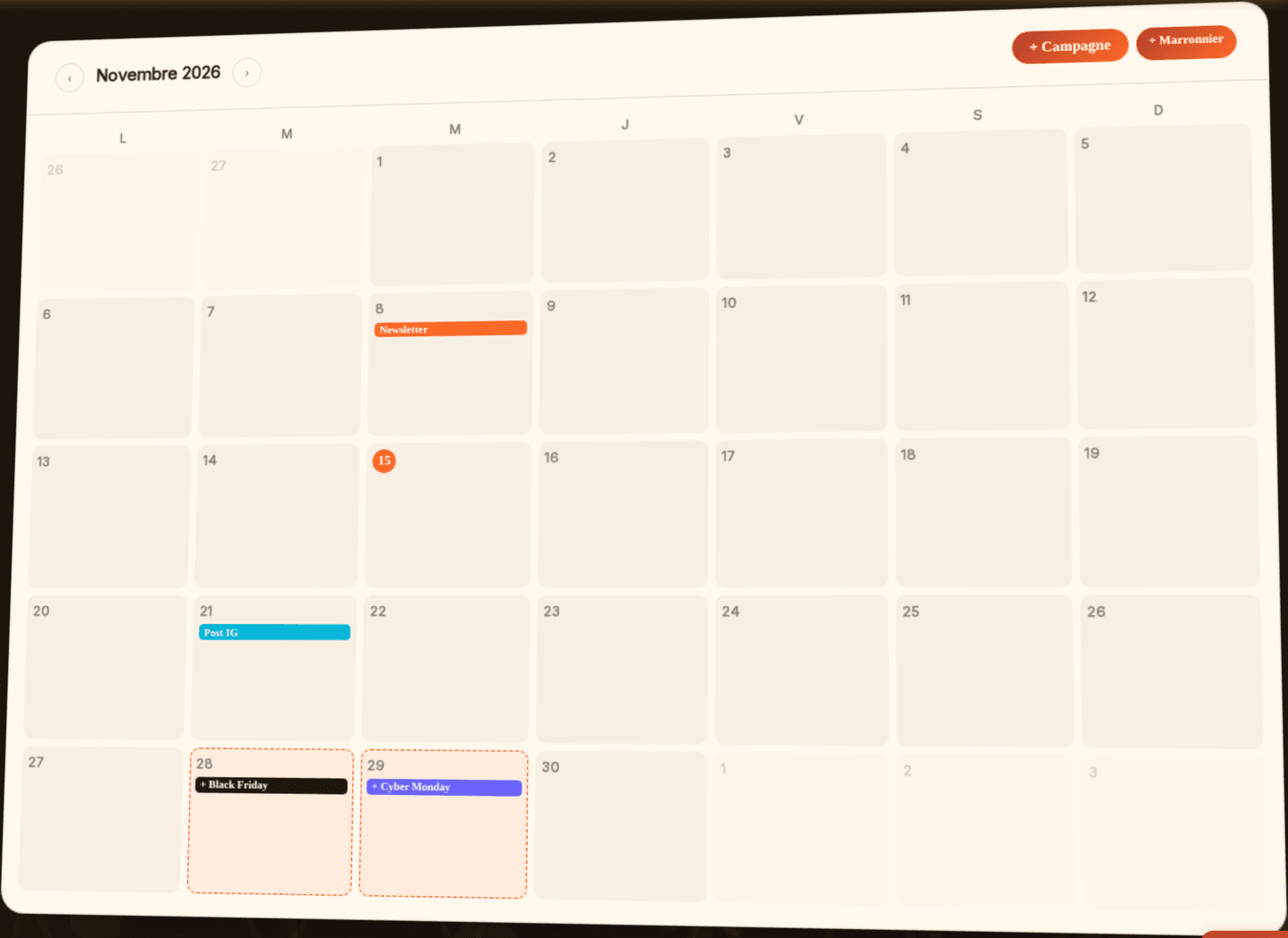
I took the one marketing notion I knew, the seasonal calendar of commercial key dates, and made it the heart of the program: more than 80 dates recalculated every year, laid out in a calendar where everyone adds their own campaigns and recurring key dates. The microservice thus became a tool for transactional mail as much as for mass marketing sending.
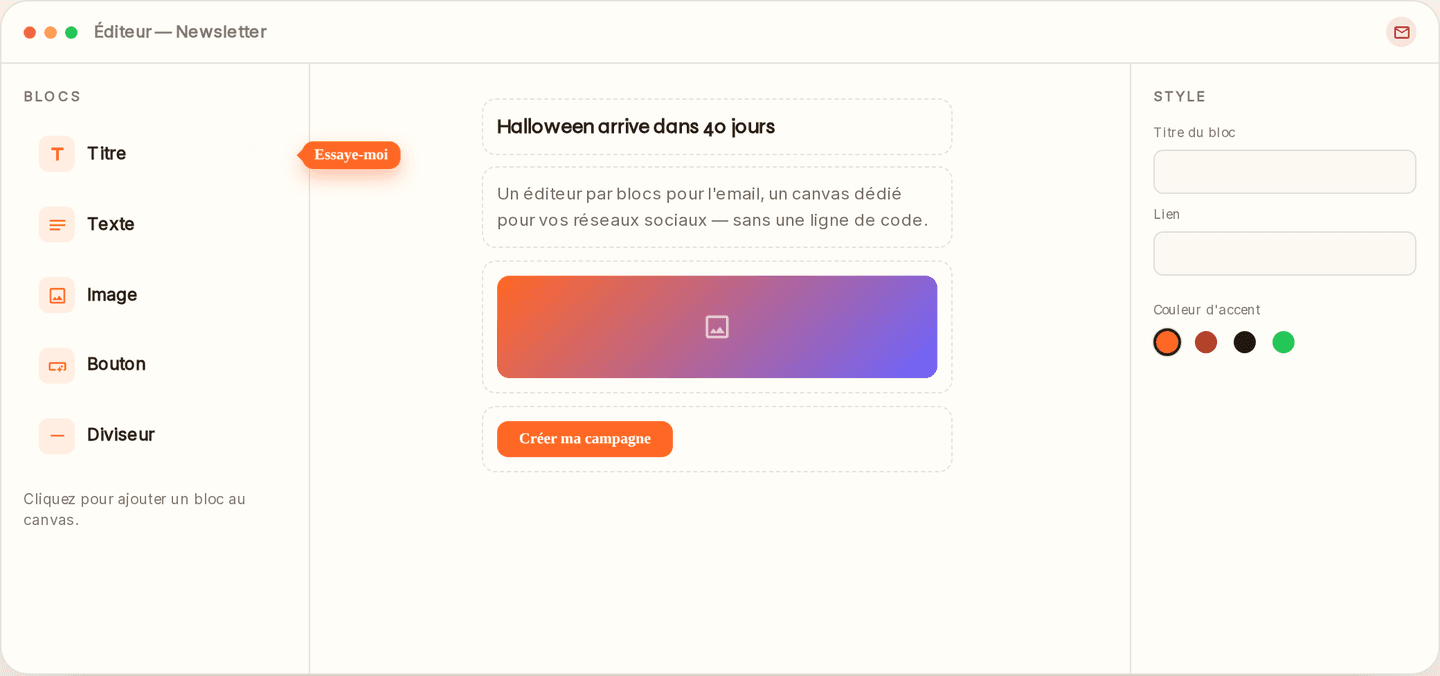
Content is composed in a block editor, the same one for emails and social networks: heading, text, image, button, divider. Drag a block, change a colour, preview, without a line of code, and a campaign goes out at once to the contacts and to the connected Instagram, Facebook, LinkedIn or TikTok accounts.
Functional additions followed: the link to social networks, and mail aliases. Those aliases answered a client need, a marketplace that wanted to anonymise the addresses of its buyers and sellers while still letting them talk outside the platform. Messages are sent to an alias, I intercept them, save the conversation in a dedicated chat inside the marketplace, then send a fresh email on to the other party.
The rest of the communication followed: automations triggered by event, delay or condition, contacts and segments synchronised across domains, an engagement score per contact, capture forms, live analytics of opens, clicks and conversions, and complete activity logs.
From a mail-sending microservice
At the start, the service only sent authentication emails and those of the side programs at Alaïs-Studio.
Like all our in-house tools, it was meant to become a product: I gave it an interface to compose email templates, and it started to live on its own.
The seasonal calendar as the added value
What was left was finding what would make the difference. I took the one marketing notion I knew, the seasonal calendar of key dates, and built the program around it.
More than 80 commercial dates are computed automatically every year, from Black Friday to Cyber Monday, Christmas, the sales, Mother’s Day, back to school or Halloween. Each one can be enabled, ignored or completed with a key date of your own.
Transactional and mass sending
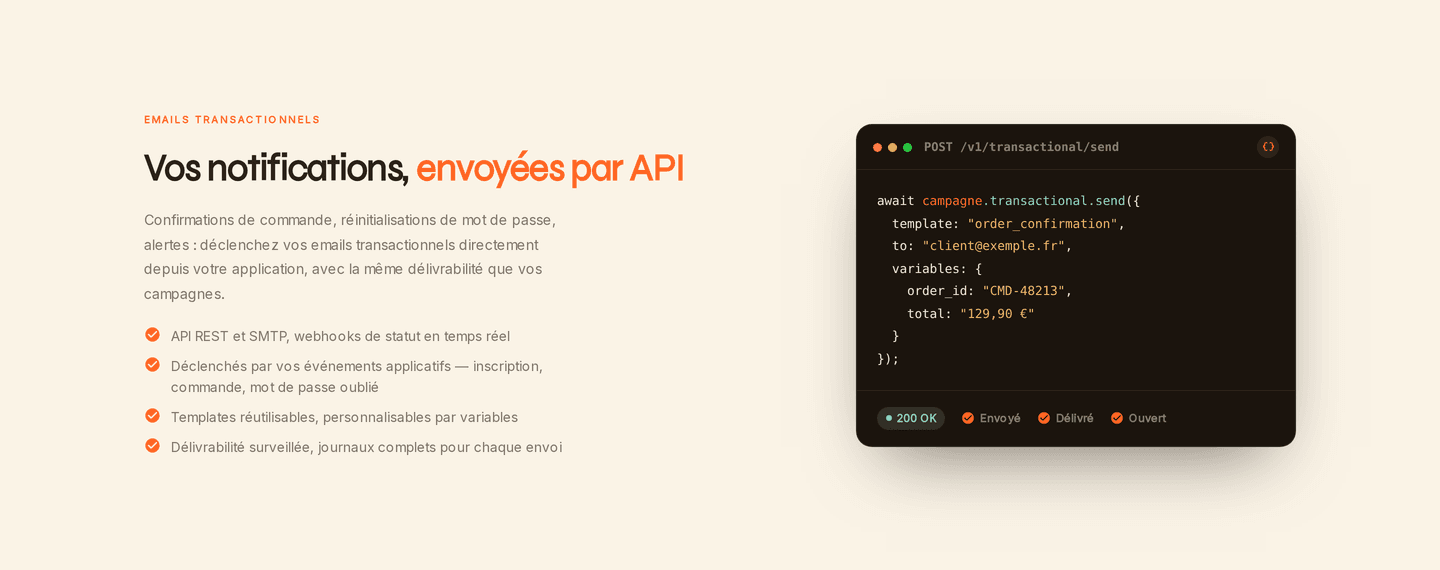
The same tool serves both uses: notifications triggered by an application (sign-up, order, forgotten password) over a REST API or SMTP, with status webhooks, and marketing campaigns sent in bulk.
Templates are reusable and personalised through variables, deliverability is monitored and every send leaves a complete log.
The block editor and social networks
Two canvases, one block logic: heading, text, image, button and divider serve emails as much as social posts, with a preview faithful to the send.
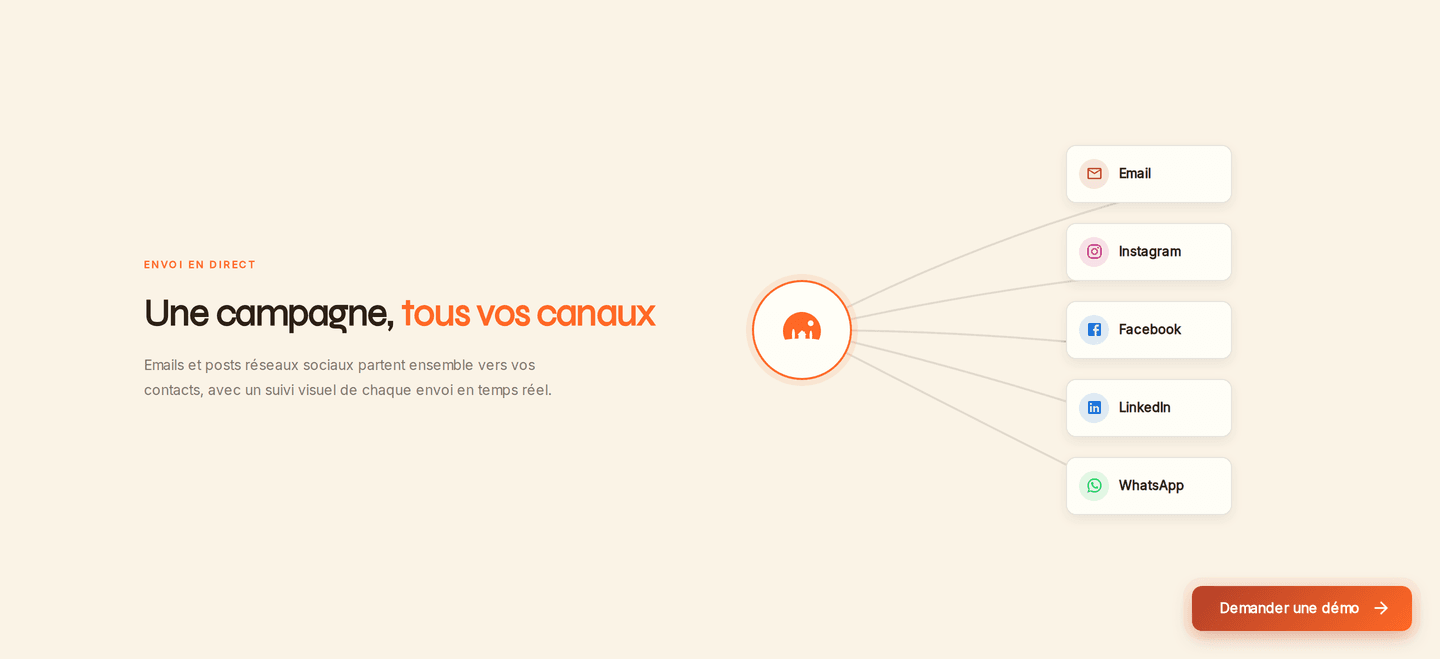
A campaign then goes out to the contacts and to the connected Instagram, Facebook, LinkedIn and TikTok accounts, straight away or on the planned date, with visual tracking in real time.
Mail aliases, for a marketplace
A client running a marketplace wanted to anonymise the addresses of its buyers and sellers, without stopping them from talking outside the platform.
Each party therefore writes to an alias. I intercept the message, save the conversation in the marketplace’s dedicated chat, then send a fresh email on to the other party: neither sees the other’s real address, and the exchange stays on record on the platform side.