ITESOFT
I joined ITESOFT as an intern in March 2020, for four months. The start was complicated: my first day fell the day before France’s first lockdown.
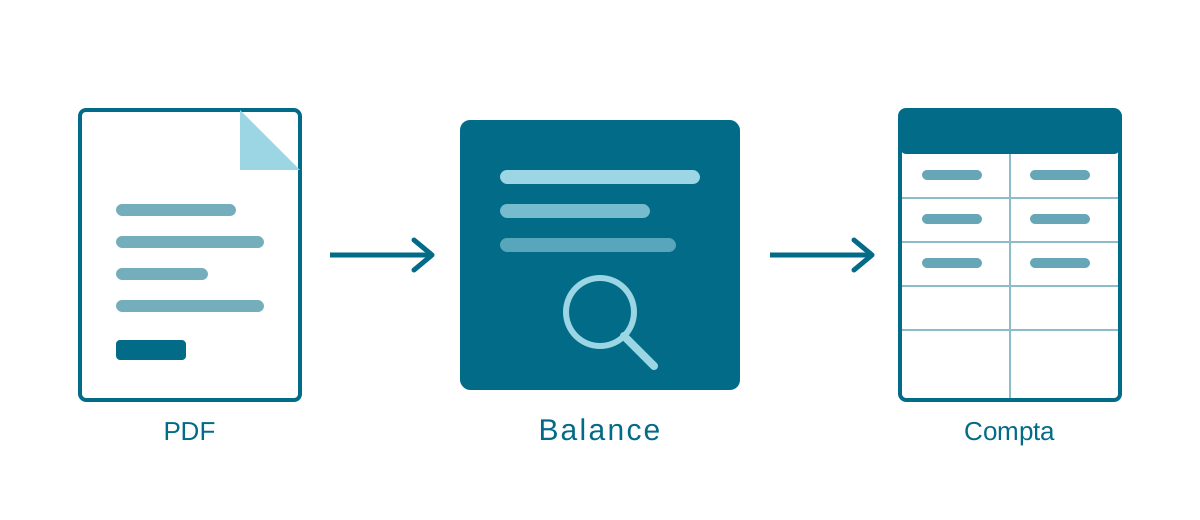
The assignment covered the automated functional tests of Balance, their application that reads the PDF of an invoice and fills the accounting information into an accounting package. I was placed in the Delivery team, the one that ships the program to the client and can carry out specific development before delivery. The tests existed exactly for that: checking that the program still works once that specific development has been added.
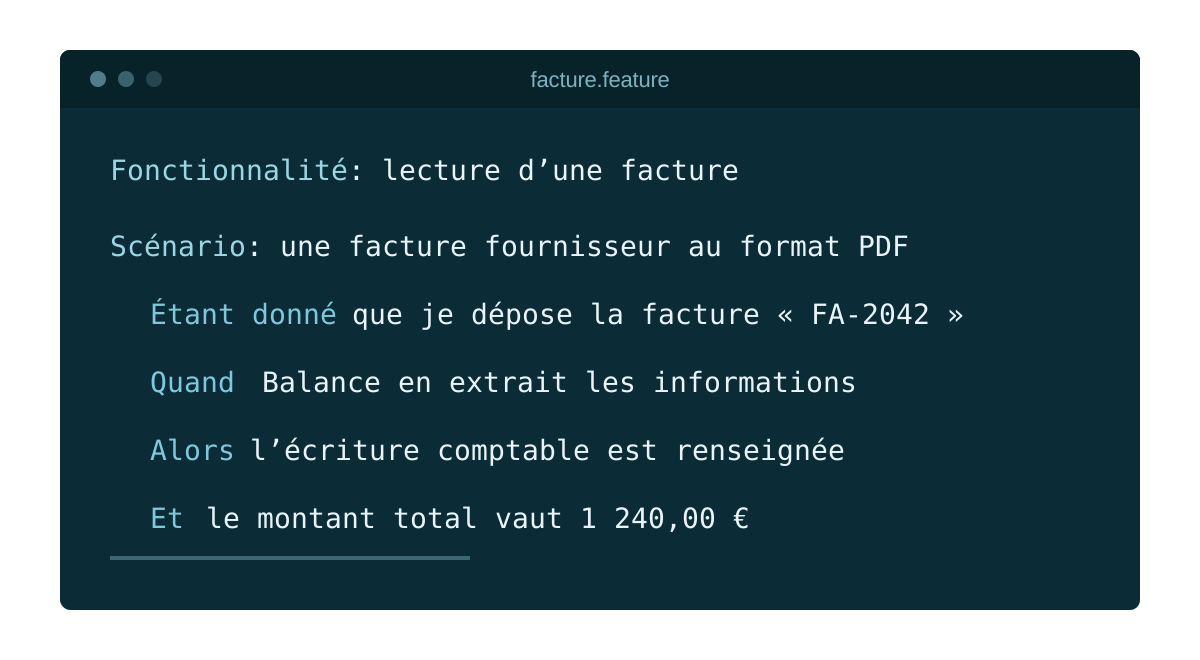
I was handed the project built the year before by the apprentice, with a clear technical instruction: change technologies and move to CucumberJS, so that the Gherkin language brings real value to how the tests are understood.
The scenarios had already been written by hand, so all I had to do was implement them. I rewrote every test under CucumberJS and added the ones that were missing.
An internship starting the day before lockdown
(March 2020)
First day at ITESOFT on the eve of the first lockdown: the project had to be taken over in conditions that suited nobody.
Balance, and the Delivery team
Balance reads the PDF of an invoice and carries its accounting information into an accounting package.
The Delivery team ships that program to clients and, where needed, carries out specific development before delivery. The functional tests were there to check that the program still held up after those additions.
Moving to CucumberJS
The starting point was the previous year’s apprentice project. The instruction: change technologies for CucumberJS.
The point was the Gherkin language, which writes scenarios as readable sentences and makes the tests understandable beyond developers alone.

Rewriting the tests, and filling the gaps
The scenarios had already been written by hand: my job was to implement them.
I rewrote every existing test under CucumberJS, then added the scenarios still missing from the coverage.